Beretta: Celebrating 500 years of tradition and innovation

Beretta: Celebrating 500 years of tradition and innovation
An exclusive behind-the-scenes interview with Franco Gussalli Beretta and his son Carlo Gussalli Beretta
By John J. Radzwilla
January 1, 2026
Reading time: 25 minutes

The celebration of Beretta's 500th anniversary begins with the year 2026. As 2025 drew to a close, Hook & Barrel gained exclusive behind-the-scenes access to discover what the future holds for this legendary gun manufacturer.
The first thing you notice in Beretta's historic factory in Gardone Val Trompia is the sound. It's not deafening; it's layered. The delicate scraping of the craftsmen shaping the walnut stocks. The hum of the machines machining the steel frames. The heartbeat of a factory perfected over half a millennium.
The "Valley of Arms," as it is commonly known due to its long and prolific tradition of firearms manufacturing, centered in the province of Brescia, Lombardy, is steeped in history, and one company shines like a jewel there: Beretta.
In the 1980s, as the company was preparing to celebrate its 300th anniversary, a major historical discovery disrupted plans: a handwritten receipt attesting to the sale of cannons to the Republic of Venice, dated 1526.

This discovery added nearly 200 years to the company's official history, but above all, it reinforced the legacy of the Beretta family.
This "receipt," detailing the sale of 185 arquebus barrels, is addressed to Mastro Bartolomeo Beretta. What is noteworthy, beyond its historical significance, is the use of the title "Mastro," meaning master.
Becoming a master requires decades of practice and several generations of expertise, suggesting that Beretta's lineage actually goes back approximately 80 years beyond the officially documented 500 years. This confirms Beretta as the oldest firearms manufacturer in the world, and for good reason.

At one end of the site, craftsmen polish the stocks by hand and engrave stories in the steel; at the other, robots pivot and measure tolerances in a choreography that only an engineer can fully appreciate.
But what truly defines Beretta are the people, the soul of the company, many of whom have worked there for over 30 years and represent entire generations of families who have worked at Beretta.
At the helm of the company are Pietro Gussalli Beretta and Franco Gussalli Beretta, while Carlo Gussalli Beretta, Franco's 28-year-old son, is being prepared to assume the 16th generation of leadership.

Pietro also has a 13-year-old daughter, Maria Teresa, who could one day share this responsibility if she so wishes. However, she has many years to make that choice.
The lessons of Franco Beretta

Franco Beretta is the patriarch and current leader of the family legacy.
Franco Beretta smiles often. This is surprising, because he is also precise, and precise people aren't always warm. He is both. His leadership style doesn't come from a prestigious business school, but from service. Not corporate service, but national service.
He served in the Carabinieri, the Italian gendarmerie, and the way he talks about it gives a better understanding of the company than any factory visit.
“At the barracks, you’re completely reset,” he explains. “As soon as you walk in, someone shouts, time is counted down to the minute, and you learn that you’re equal to everyone else, regardless of your background or family. You obey, you march, you share the bathroom with a hundred people. It’s not comfortable. But it makes you a man.”
He recounts the first week, where nothing is natural, where even drinking a glass of water becomes a privilege earned through collective discipline. A freedom born of rigor and synchronization. The metaphor is clear: in this valley, talent matters, but the team matters even more.
The other lesson comes from the uniform. "You're no longer Franco," he says. "You're a Carabinieri. Responsibility comes before your name." Humility of rank, duty before preference. Millions of guns later, Beretta still operates this way.

Franco's rise to the CEO position came about gradually, accompanied by the guidance laid down by his father, Ugo Gussalli Beretta: choosing his team, learning the trade, but always remembering that his father was still there. Franco managed Fabbrica d'Armi Pietro Beretta, while his brother Pietro ran Beretta Holding.
Titles came before real authority. "There's a difference between day-to-day management, professional skills, and a long-term entrepreneurial vision that involves risks," he explains. "I had to evolve from one to the other."
This approach is reflected in his vision of succession. The handover was smooth, without pressure. "University studies and military service were mandatory," he says. "After that, if you want to work here, great. Otherwise, go find your own way." He offered Carlo the same freedom.

Franco always comes back to two pillars: people and financial health. "We are entrepreneurs, but the company belongs first and foremost to those who make it thrive. And it must remain financially independent so as never to depend on anyone."
He then recounts a famous story: in his great-grandfather's private study was a safe labeled "Home Security," filled with enough gold to pay the employees for a full year. "If you can't pay your people," he says simply, "you have nothing."

Two Beretta M12 submachine guns, one with gold plating and a wooden stock. The weapon was first produced in 1961.
The 16th generation is coming

Carlo Gussalli Beretta embodies the next era of Beretta leadership.
Carlo arrives with a confident Italian elegance, but also with a constantly active mind. Born in New York, bilingual and bicultural, he is disarmingly honest about his strengths and limitations.
“I was never pushed,” he explains. “No one told me, ‘Study this because you’ll do that later.’ I studied what I loved: economics and management. I’m not an engineer. So I asked myself: what can I bring to a factory full of engineers? People. Culture. Connection.”
He worked in human resources at West Point, then at Bombardier Transportation in Berlin, observing how large organizations operate and why they sometimes fail.
His observation: corporate cultures that intersect are enriched; those that isolate themselves fail.
“Teams calls are fine,” he said, “but when I walk into the factory in Tennessee or the office in Accokeek, people immediately change the way they interact. Trust is built faster in person.”
His internal journey began where his advantages were less in HR and marketing before expanding to what he is particularly suited to lead: the Pietro Beretta Selection & Luxury segment, where the customer experience must honor centuries of know-how while remaining resolutely modern.

The dichotomy between heritage and innovation is visible at almost every intersection of the Beretta factory. From craftsmen who still adjust wooden stocks with a rasp, to robots that test mechanical tolerances, progress is on full display while tradition remains firmly rooted.
“High-end isn’t just about price,” he explains. “It’s about memory. It’s everything surrounding the object: the reception, the story, the feeling that your weapon is unique.”

He also addresses digital culture with clarity. Not the brutal approach of tech giants, but a disciplined innovation, adapted to craftsmanship. "You can't throw sensitive data into open tools. Here, innovation happens step by step, from the bottom up."
Beretta is not standing still, however. A first concrete application comes from the workshop: AI-assisted grading of walnut stocks. Master graders have trained a vision model to evaluate the grain and patterns of the wood, allowing human expertise to focus on the finishing and craftsmanship.
In R&D, engineers are exploring CAD acceleration and predictive maintenance for CNC machines. In contracts, AI helps analyze government documents thousands of pages long.

“It’s not always visible,” Carlo explains, “but almost every sector has a use case. The real challenge is to share what we learn to avoid solving the same problem twice.”
A milestone, not a finish line

When asked "What do 500 years represent?", Carlo replied without hesitation: "Both. A celebration, but also a springboard to the next 500 years."
For this anniversary year, Beretta plans ten unique pieces spread across the entire range of pistols, rifles, and shotguns, pushing the boundaries of several generations of craftsmen.
“Beretta is the only company in our sector,” explains Carlo, “to fully exist in two worlds: the entirely manual workshop and the modern automated factory. Beauty sometimes lies in their intersection.”
The discreet leadership

"To lead here, you have to be professional. But you also have to maintain a human relationship with your team. Without that, you can't manage a company like this."
— Franco Gussalli Beretta
Franco listens more than you might think. He speaks less than most executives, but when he does, the room falls silent. What he takes from his father is neither the revenue nor the products, but the relationships.
"You have to be competent, prepared, and have a deep understanding of the profession," he said. "But without human connection, nothing is possible."
This philosophy explains why Beretta is neither a publicly traded company seeking quarterly dividends, nor an asset to be sold off. "Some optimize to sell and live in luxury. We respect that. But that's not our mentality. We put the company first."
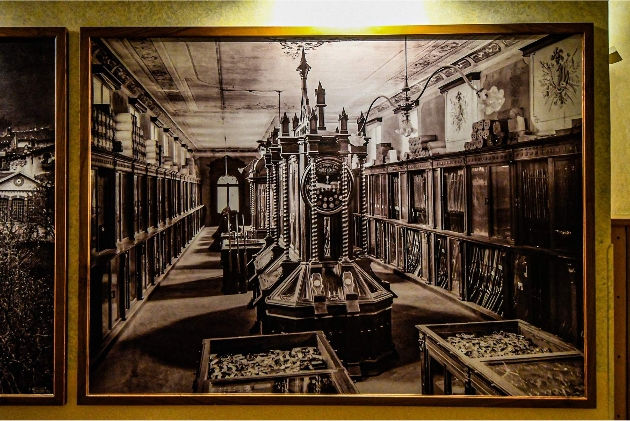
This is how we get through wars, pandemics… and sixteen generational transmissions.
Carlo Beretta: the son who listens

Carlo Gussalli Beretta, along with his cousin Maria Teresa Gussalli Beretta, represents the sixteenth generation of the Beretta family. Together, they now lead a multinational empire spanning five continents, encompassing 17 different companies within Beretta Holdings.
Carlo is not a copy of his father. He has his own style, a designer version studded with diamonds, which has traded his father's tweed jackets for tailored pinstripe suits. But much of his attitude remains the same.
He'll tell you he's such a good listener that his friends tease him about it, because first impressions can sometimes misinterpret his reserve. Yet, during our long interview and the day we spent together, I saw this habit confirmed.
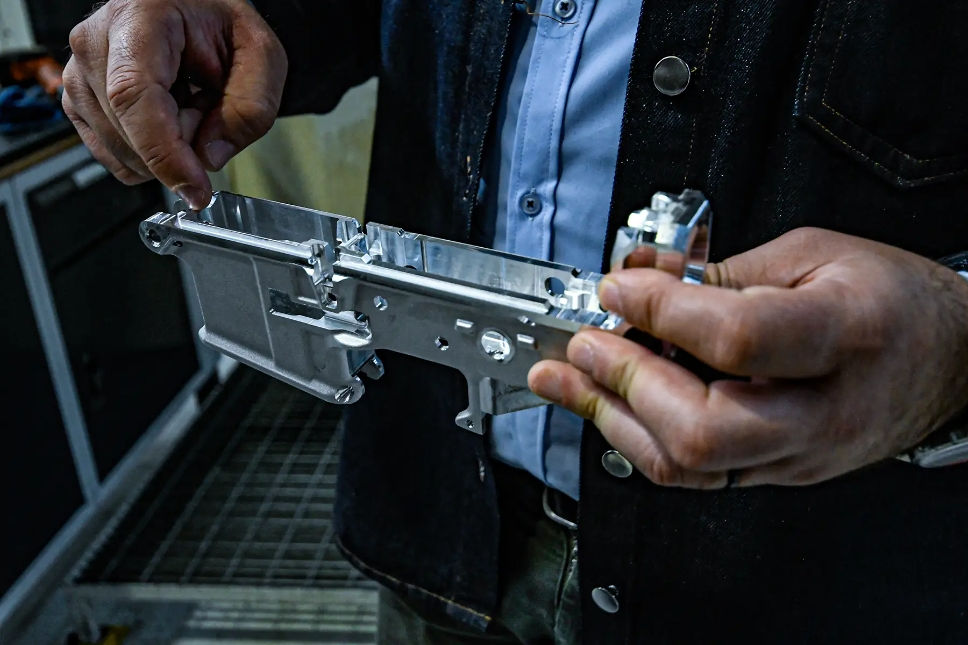
"I value the expert," he said. "I want decisions supported by the person who knows the most. So, I listen more than I speak."
This clear-sightedness prevents him from falling into the trap every heir dreads: telling master craftsmen how to do a job they already know better than anyone else. "I won't be the one to teach a gunmaker how to make a gun," he states confidently. "I need to understand enough about everything, and then build the right teams."
There is a humility in the way he has charted his course. On the one hand, he voluntarily immersed himself in sectors of the company that did not correspond to his natural reflexes, in order to speak the language and feel the constraints.

On the other hand, he took charge of the areas where he can truly shape the future: the luxury experience, intercultural collaboration, and the gradual integration of digital technology within a heritage brand.
This balance is also reflected in his approach to artificial intelligence. He doesn't seek to graft computers onto engraving workbenches. Rather, he seeks to eliminate friction where craftsmanship is lacking, so that craftsmanship can endure longer where it is essential.
The Beretta turn

The result is a recipe for success: Beretta thrives because, generation after generation, heritage has been treated not as a burden to bear, but as an opportunity to move forward.
Before I left, we talked about the ten unique pieces planned for the 500th anniversary. We discussed the differences between Beretta Italy and Beretta USA. We talked about trucks, physical fitness, and the reality of being a CEO who has once packed boxes and still cares about the person stocking the shelves.

A Beretta 93R select-fire pistol, gold-plated, equipped with a shoulder stock and a high-capacity magazine.
Franco Gussalli Beretta laughed when I told him about the first time the Hook & Barrel magazine displays were empty in a Bass Pro Shop, followed by embarrassed apology calls. He knows this kind of problem. He's been there.
A Beretta 93R select-fire pistol, gold-plated, equipped with a shoulder stock and an extended magazine.
I walked through the factory one last time before leaving, listened to the steady hum of the mill, and realized that the title of this article had been there all along. Legacy isn't something you possess. It's something you carry as far as possible, with the people who will outlive you.
Beretta at 500 is not a museum exhibit. It's an invitation, and Hook & Barrel is honored to help you open the door.
Beretta at 500 years old
As I left the factory, the hum of the machines still echoed. The title of this article came to me naturally: legacy is not something one possesses. It is something one carries, as far as possible, with those who will outlive us.
Beretta at 500 years old is not a museum exhibition. It is an invitation.
And Hook & Barrel is honored to help you cross that threshold.
Beretta History Timeline
(Accurate translation — see request if you want a condensed, magazine or infographic version)
1526 First spark:
sale of 185 arquebus cannons to the Republic of Venice

1571 – Battle of Lepanto
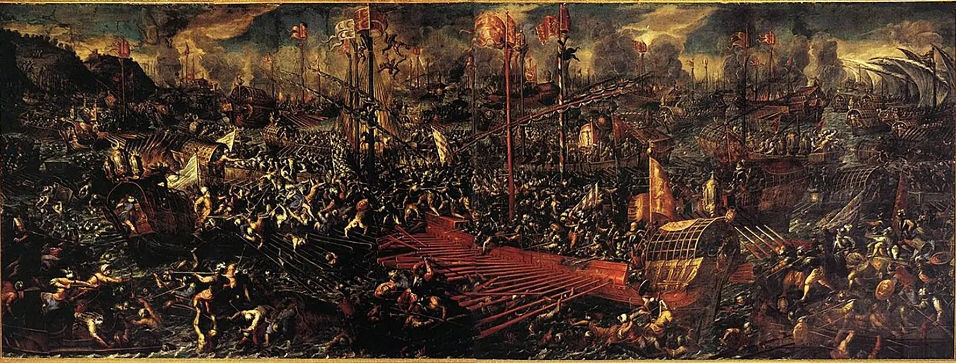
The support given to the Republic of Venice during the Battle of Lepanto slowed the Ottoman advance and marked the beginning of its positioning as a leader in excellence in the manufacture of firearms.
1790 – Supply of 40,000 muskets to France

Beretta supplied 40,000 muskets to the French army. These weapons were used by both revolutionaries and the forces of the Empire, transcending sides as they served under different banners.
1830 – Beginning of Damascus steel cannons

The improvement of the Damascus steel method revolutionized the industrial production of guns, making Beretta a true pioneer in this field.
1850 Flood of the Mella River and reconstruction
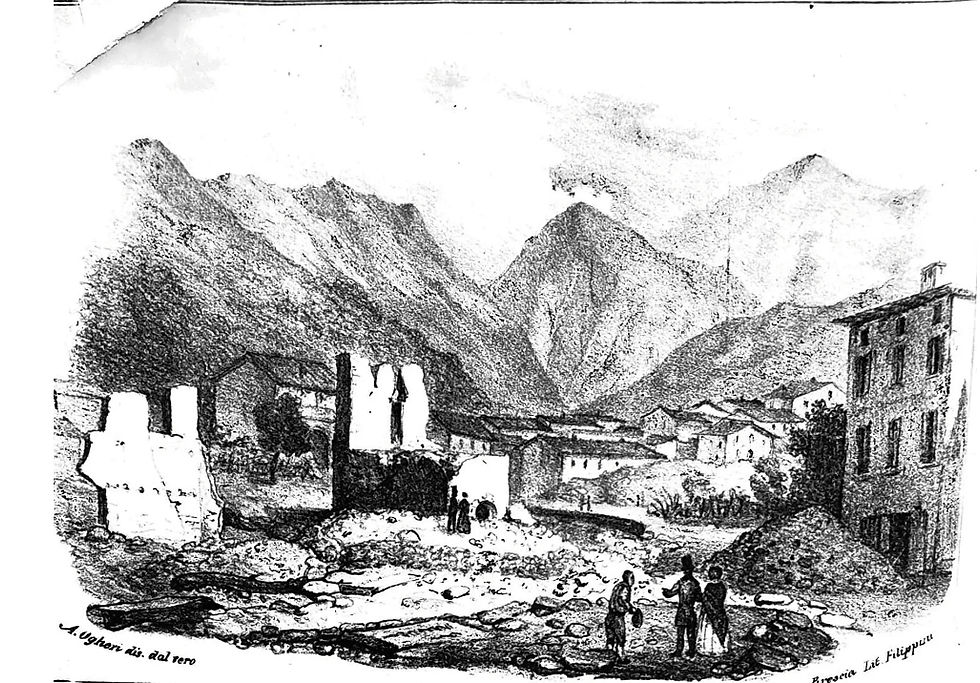
When the Mella River overflowed its banks, Beretta did not simply recover: the company rebuilt and established its current production site, transforming a crisis into a new beginning.
1880 The world's first firearms showroom

Giuseppe Antonio Beretta founded the world's first ever gun showroom, now known as the Beretta Private Collection (or Beretta Museum), which houses more than 1,200 historic firearms.
1903 Transition to modern industrialization

Under Pietro Beretta's leadership, a historic leap took place: the transition from artisanal tradition to modern industrial production, making the company a trusted supplier for governments and foreign markets.
1913 Adoption of hydroelectricity

At a time when energy came mainly from fossil fuels, Beretta built one of Italy's first hydroelectric power plants.
1915 First semi-automatic pistol

The creation of the first semi-automatic pistol, the Model 1915, marked the transformation of the company into a global brand.
1933 Birth of the SO1 luxury rifle
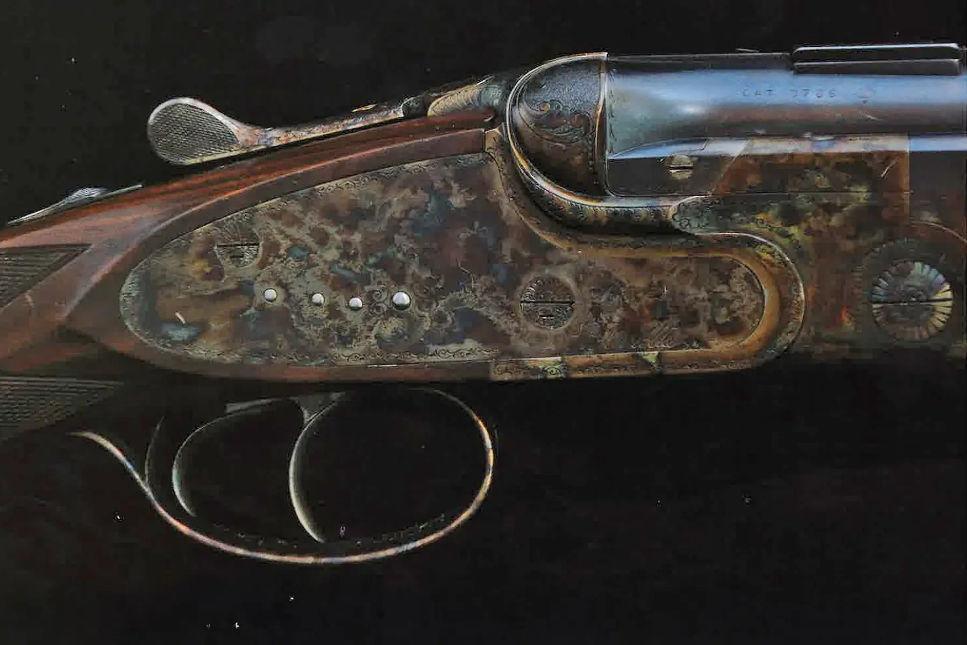
The SO1 was born: a luxury handcrafted shotgun and precursor to the modern SO10, opening up the global market for high-end over-and-under shotguns.
1945 Foray into the automobile industry

The BBC car: Beretta's foray into the automotive industry. The company produced automobiles for a short period, but this clearly demonstrated its ability to innovate and venture into new areas.
1947 Industrial mastery with the ASE model

The ASE shotgun was born: the first over-and-under shotgun incorporating industrial machining and technologies. Combining experience and audacity, the ASE is the ancestor of the legendary DT11.
1949 Creation of Fabbrica d'Armi Pietro Beretta SpA

In the post-war period, Beretta became Fabbrica d'Armi Pietro Beretta SpA, the equivalent of a joint-stock company or corporation.
1950 Expansion to the United States

Driven by the desire to establish itself far from its roots, Beretta crossed the ocean for the first time and turned its gaze towards the United States.
1953 Creation of the iconic logo

Gabriele D'Annunzio's artistic genius recognized the importance of Beretta and provided what became the company's historic logo.
1956 First Olympic Games

A winning decision led Beretta to participate in its first Olympic Games in Melbourne, where Galliano Rossini won a gold medal using a Beretta rifle.
1977 Beretta USA Foundation

Beretta USA was founded, establishing a direct presence in the United States to better serve both private clients and institutional partners.
1981 Creation of the Beretta Foundation

Driven by human and ethical values, the Beretta Foundation was created to advance cancer research and treatment for the benefit of the local community.
1985 Adoption of the M9 pistol by the US Army

A precision weapon that combines durability and reliability in all conditions, adopted by the US Army as part of an order for 457,454 units.
1990 Launch of the clothing line

The Beretta clothing line was launched to merge functional hunting apparel with sophisticated lifestyle design.
1995 First website and first gallery in New York

At a time when digital technology did not yet dominate the world, Beretta was ahead of its time by registering one of the very first web domain names: beretta.com.
1995 Opening of the first Beretta Gallery in New York
The first Beretta Gallery opened in New York, marking a pioneering step in the industry: for the first time, the brand was addressing end users directly, going beyond the traditional approach focused on retailers and specialists.

1995 One vision, several paths
Beretta Holding has expanded its opportunities globally through the integration of companies that produce and distribute products complementary to those of Beretta.

2011 Creation of Beretta Defense Technologies

The founding of Beretta Defense Technologies (BDT) has enabled Beretta to adapt quickly to the evolving global defense market.
2023 Launch of Pietro Beretta Selection

A new collection has been born to preserve artisanal know-how, combining elegance, attention to detail, excellence and passion: the Pietro Beretta Selection.
2024 Olympic domination in Paris

As a symbol of Beretta's commitment to environmental sustainability, the company has chosen, for the first time, to certify the carbon footprint of its products.
2026 Celebrating five centuries of history

Looking to the future, Beretta celebrates the first five centuries of a timeless history, built on vision, values, innovation and a common purpose.
Here is a French translation faithful to the author and magazine. Here is the link to the original text.


Comments